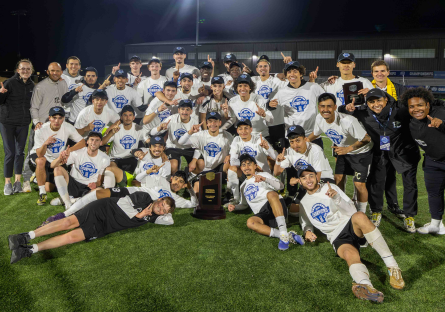
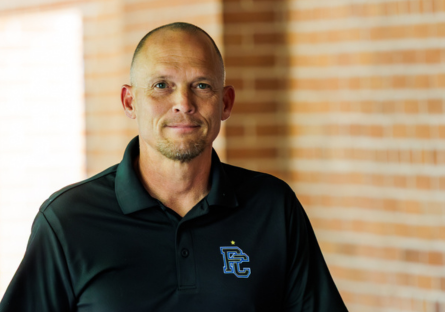
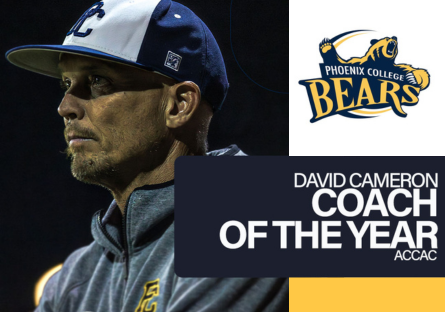
While his players stormed the field, embraced their trophy, and celebrated in joyous screams after winning the 2025 NJCAA Division II Men's Soccer National Championship, Coach Dave Cameron was so focused on keeping his emotions from influencing the game that he walked quietly across the pitch to congratulate the other coach.
After twenty-plus years at the helm of Phoenix College Men's Soccer, Cameron evolved his coaching style from a demanding focus on results to one that emphasizes emotional regulation, bringing equanimity to the ups and downs of winning and losing. The national title wasn't the destination. It was proof of his new coaching philosophy.
The Long Road to the Present
Cameron has been at Phoenix College longer than he hasn't. He played soccer for the men's team in 1994-95, returned as an assistant coach in 2002, and took over as head men's coach in 2005. "More than half my life," he says.
For most of that time, Cameron built his coaching mindset on ego and the relentless pursuit of winning. He was the loud rah-rah coach, he explains. The one who treated the scoreboard as everything. He built remarkable teams — the kind that regularly made national runs — and remained perpetually, painfully close to winning a national championship.
The breaking point came in 2018. "I had, I think, the best team in the country," Cameron says, "and once again we're not going to nationals. I realized I had all these great humans around me and didn't develop relationships with them. It was all about ego and winning." He pauses. "I almost quit."
Instead, he pivoted. He coached high school girls' soccer at Millennium, deliberately untethering himself from the obsession with outcomes. Cameron told himself and the team, "I'm not going to worry about winning, I'm not going to talk about it again. We're going to play the game we love and enjoy the process." They ended up winning three tournaments.
Cameron also watched a film called Forever Strong, based on the real story of a rugby coach from Utah who compiled one of the most extraordinary winning records in American sports history not by drilling tactics, but by sitting down with players one-on-one and asking how they were doing in life. "He just talked to them individually," Cameron says. "That resonated with me."
Then came Diego Walsh — a Brazilian-born coach and certified yoga instructor. Cameron reached out to him while Walsh was in a cave in the Himalayas. Walsh's phone shouldn't have been working, but improbably, Walsh answered. Cameron calls it fate.
Walsh introduced yoga, mindfulness, Eckhart Tolle's The Power of Now, ice baths, and breath work to PC's soccer program. It was, by most conventional measures, an unusual choice. But it worked.
"We started oh-and-three," Cameron recalls of his and Walsh's first season together in 2021. "Worst start in years." But the team was committed to the method. Then the team won nine straight games and earned a trip to the regional championship. "But it's in Tucson against Pima," recalls Cameron. "We've never won there in a playoff game." Down one to zero, they tied it. At that point, the players knew they would win.
"It was the most amazing experience of my life, because we won on penalty kicks," says Cameron. His son Jack, who was 14 at the time, hopped over the fence to join the dog pile of players on the field. "Everyone runs to celebrate except Diego and me. We just looked at each other with tears of joy and took it all in."
They made it to Nationals, but Cameron fell back into old coaching habits. During a critical moment, he found himself yelling at the officials and reacting emotionally rather than staying present. Described as an out-of-body experience, he knew what was happening but struggled to regain control. The loss was a painful reminder that personal growth is never complete and that emotional discipline requires constant attention. Afterward, Cameron took responsibility for his actions and apologized to the players and coaching staff.
The seasons that followed were their own kind of education: in 2022, Cameron steps back to let a tactically brilliant coach run substitutions; in 2023, they make the national championship game but lose in penalty kicks; in 2024, they can't get out of bracket at nationals and struggle with injuries. Each year, Cameron rebuilt his philosophy on those grounding principles of mindfulness.
The Science of Staying Present
What Cameron has constructed at Phoenix College bears little resemblance to what most people picture when they imagine a junior college soccer program. Yes, the team studies film. Yes, they work on set pieces. Yes, they practice tactics. But the core curriculum is emotional regulation.
"We focus on keeping emotions in check, and the science behind the brain and its ability to think in an environment of love versus anger. Hating your enemy, all that stuff — it doesn't work. It doesn't develop the freedom of play."
The proof: zero red cards in three years. In a sport notorious for its capacity to ignite tempers, the Bears control their emotions. Not one ejection. "We compare it to the top players in the world," Cameron explains. "Messi, Ronaldo — they're naturally gifted to control their brain in the most difficult moments. The normal population? We have to practice."
In 2025, Cameron gathered his coaches and players, trying to get everyone to buy into the philosophy: "This is what we're doing. We're meditating. We're training."
The Team That Finally Bought In
Coach Cameron explained the philosophy in one-on-one meetings with the players and home visits with their families. He believes this isn't just about soccer, but about how to survive in this world. "It's all about how to manage your emotions at all times, whether it's with your family or at work," Cameron says.
Andre Miyazaki had never meditated before coming to PC. "Once we started doing it, I realized it does help you stay in the present and be confident," he says. "I feel like it keeps you more focused and more goal-driven, even outside soccer."
Cruzerio Cruz, PC's sophomore midfielder who became the 2025 United Soccer Coaches National Player of the Year, would tell you the 2025 season was about something else entirely. "I wouldn't be able to put into words what the environment was on and off the field," he says. "You just go to practice, and you see the guys, and you feel happy. You feel happy to be there."
Cruz came to Phoenix College as a transfer student, not through the Little Bears feeder program that connected so many of his teammates. He hadn't grown up playing for Dave Cameron. He just showed up, impressed people, and stepped into a captain's role mid-season when the original captain was injured. By his sophomore year, the players chose him to be captain.
Quiet, serious, and a natural introvert, Cruz says, "I lead by example. If the guys aren't doing what they're supposed to do, I show them, I push a little bit, letting them know: I'm not here to mess around. I'm here to get better every day."
After a mid-season road trip to Tucson, Phoenix College, ranked first in the nation, fell behind Pima Community College 2-0. They fought back to 2-2. Then, they conceded a goal in the final eight seconds.
"One of the most brutal losses I have ever taken in my career," Cruz says. He went to a corner where none of his teammates could see him. He cried. He wiped his face. He walked back. After Cameron addressed the team, Cruz asked to speak. "I spoke from my heart," he says. "I let the guys know that we weren't the Bears that everyone knows, that everyone fears."
Jack Cameron, the coach's son, who played on the championship team, remembers Cruz's speech clearly. "He really told us how it was, and how we had to improve as a team if we really wanted to win nationals." Jack pauses. "After that game, we just changed the level of our play. We were on top the rest of the season."
The 2025 Bears went to nationals with a record that stunned opponents: only one loss all year. They swept the district, state, and national titles, becoming the first NJCAA Division II men's soccer champions from a Maricopa County Community College District school.
The championship game itself felt almost serene, Andre Miyazaki recalls. "It felt like we had already won before it started, because everyone was just so focused and confident. We could see how tired the other team already was. We felt like we could play five more games."
Little Bears Grow Up
One of the stranger and more beautiful aspects of this championship team was how many of its players had known each other since childhood — and had been shaped, at least in part, by a campus youth program.
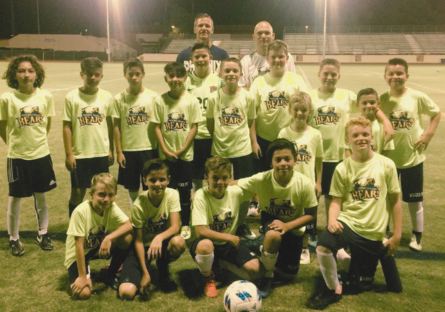
Dave Cameron started the Little Bears program in 2006, initially as a fundraising effort that quickly became something more: affordable, technique-focused soccer training for kids across the West Valley, twice a week, every summer evening at 7 pm. At its peak, 105 children attended regularly. The organization God Loves Soccer brought African refugee children to the program in buses.
"We weren't competing with soccer clubs," Cameron says. "We were offering affordable skills training." Jack Cameron, Landon Vree, Andre Miyazaki, and T.J. Pompa, once Little Bears, ended up together on the 2025 national championship roster.
"It was awesome," said Landon Vree, a freshman striker and winger, about his time with Little Bears. "We met the college players and learned from them. Every Friday, we would play a game. We were the captains and got to pick college players to be on our teams."
Miyazaki remembers working on footwork and skill moves. When he arrived as a freshman on the national championship team, he noticed the transformation in Cameron's coaching immediately. "He focused more on our mental health, our confidence. And once he realized those were really the most important things, that's when he started taking big strides and started winning."
Rings, Reunions, and What Comes Next
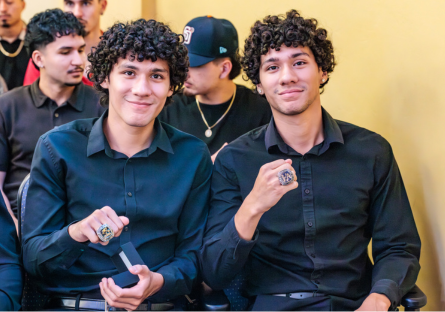
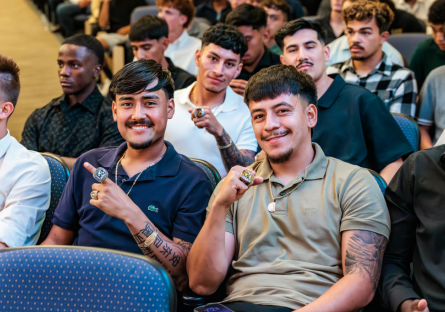
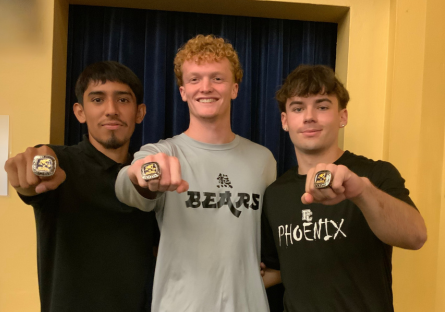
The championship rings arrived recently, and they carry the weight of everything that went into building this team. On one side: the player’s last name and the Japanese character for “bear”. The team has carried at least one Japanese player on its roster every year since 2012, a tradition Cameron calls "our lucky charm". The word engraved on the bottom of the ring is “grateful”.
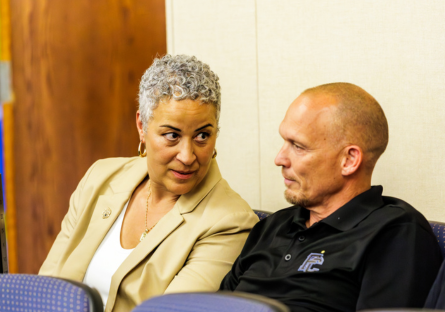
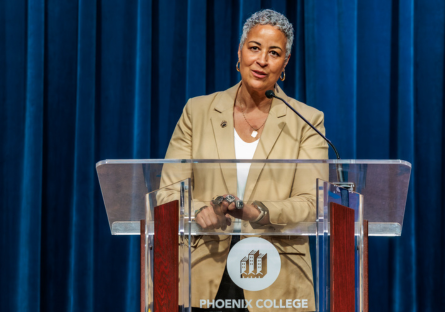
“This National Championship is special. It embodies the Maricopa Community College mission to ignite talent, transform lives, and enrich communities,” says Phoenix College Athletic Director Kristine Kincaid. “I am so proud of this group and what they accomplished. They have joined the elite group of Phoenix College National Champions. We celebrate the power of education, teamwork and the opportunities to inspire Lil Bears!”
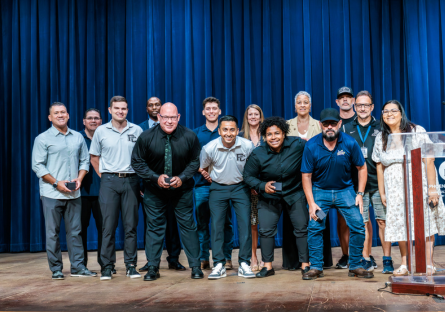
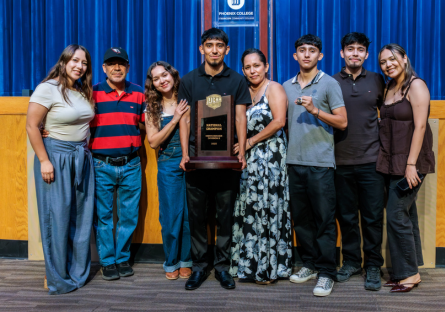
Many players have already transferred or are preparing to transfer to other schools: Jack Cameron to Cal State Northridge, Cruz and teammate Nerville Ntui to Grand Canyon University, Kosei Sasaki to Elon University, Tiernan Nicewander to Fort Hayes University, Xavier Rawls to Fort Lewis University, Horace Danitanga to William Cary University, and Joel Alonso to Delta State. A “Road to the Rings” celebration ceremony on June 16 brought the championship team back together, families and all.
Cameron, meanwhile, is already thinking about next season. Several of the freshmen who contributed to the championship are returning. He started summer training on June 1, believing preparation is a form of elite performance.
"I feel like we're at the beginning steps," he says of the philosophy, not just the program. "I don't fully understand how to do it, because there's no guidebook. But I'm so excited for next year, because we're only getting better at how to have an effective relationship with them, and teach them how to deal with this world."
The present, after all, keeps arriving.